ENCLIR
One dermatologist. Two breakthrough serums. No brand. Here's how brand and product design turned science into a sold-out launch.
Timeline
2024
Category
Web Design
My Role
Brand & Product Designer
Timeline
2024
Industry
Clinical Skincare
Platform
Webflow
BRAND &
PRODUCT
DESIGNER
Most people think a designer makes things look good. That's the last 10% of the job.
A Brand & Product Designer starts earlier and goes deeper. I work at the intersection of two disciplines:
Brand Design is about how your business is perceived — your identity, your visual language, the signals your brand sends before a single word is read. It answers: "Why should I trust you?"
Product Design is about how your product works — the architecture of a website, the flow a user moves through, the decisions that make someone buy instead of leave. It answers: "Why should I buy from you?"
When both are designed together — which is rare — the brand builds the trust and the product converts it. That's what I do. Enclir is the clearest example of how it works.
Identity, visual language, typography, tone, and the signals that build trust before a word is read.
Architecture, UX, conversion flow, and the decisions that turn visitors into buyers.
The brand builds trust. The product converts it.
BRILLIANT SCIENCE.
INVISIBLE BRAND.
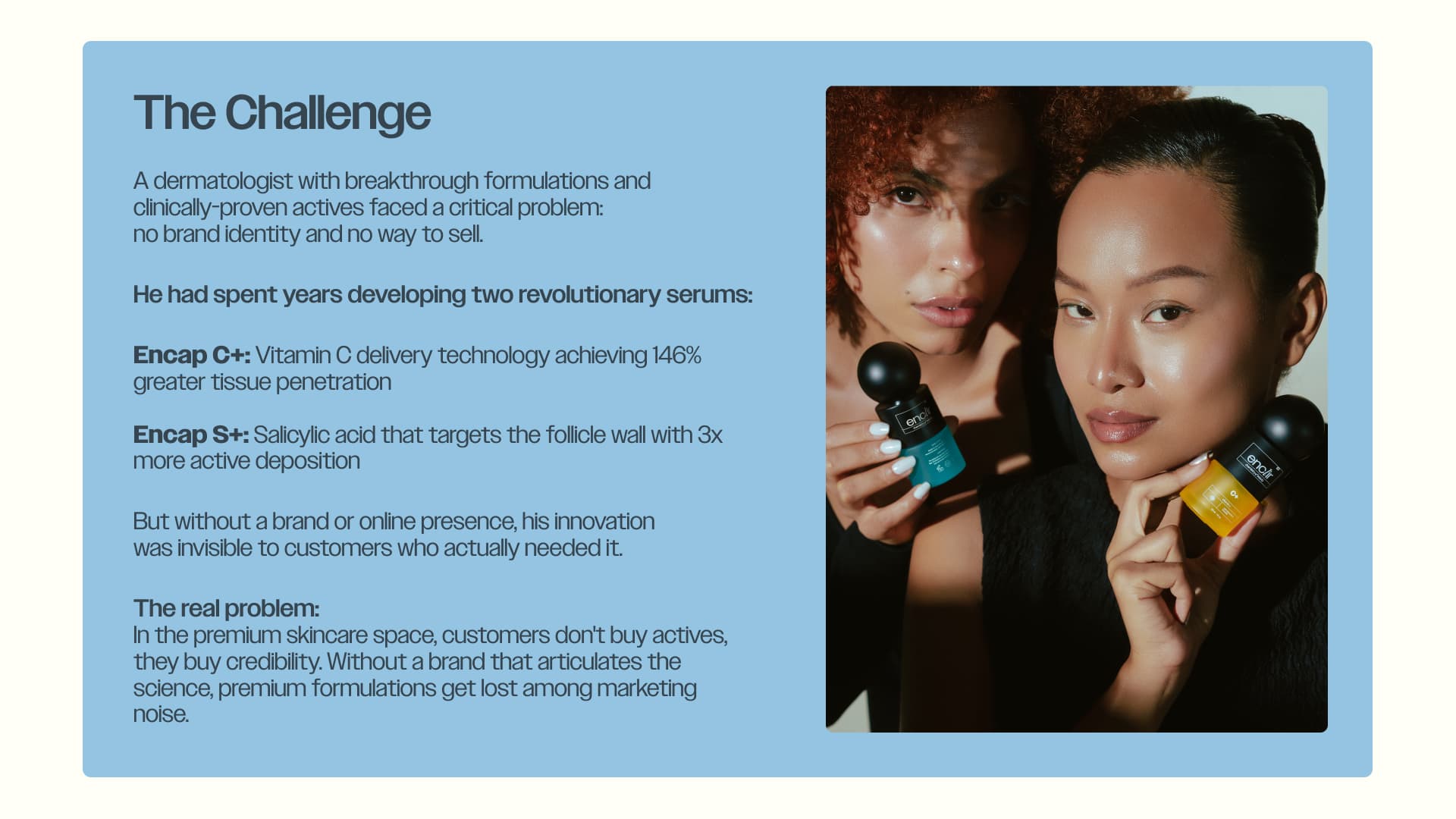
A dermatologist had spent years developing two clinically-proven serums — encapsulated Vitamin C with 146% greater tissue penetration and a salicylic acid that targets the follicle wall with 3× more active deposition.
The science was extraordinary. The brand was nonexistent.
This is exactly where a Brand & Product Designer steps in — not after the product is built, not to "make it look nice," but to build the system that makes people believe in it. In premium skincare, customers don't buy actives. They buy credibility. And credibility is designed.
"IN PREMIUM SKINCARE, CUSTOMERS DON'T BUY ACTIVES. THEY BUY CREDIBILITY. AND CREDIBILITY IS DESIGNED."
BUILDING A
CLINICAL AUTHORITY
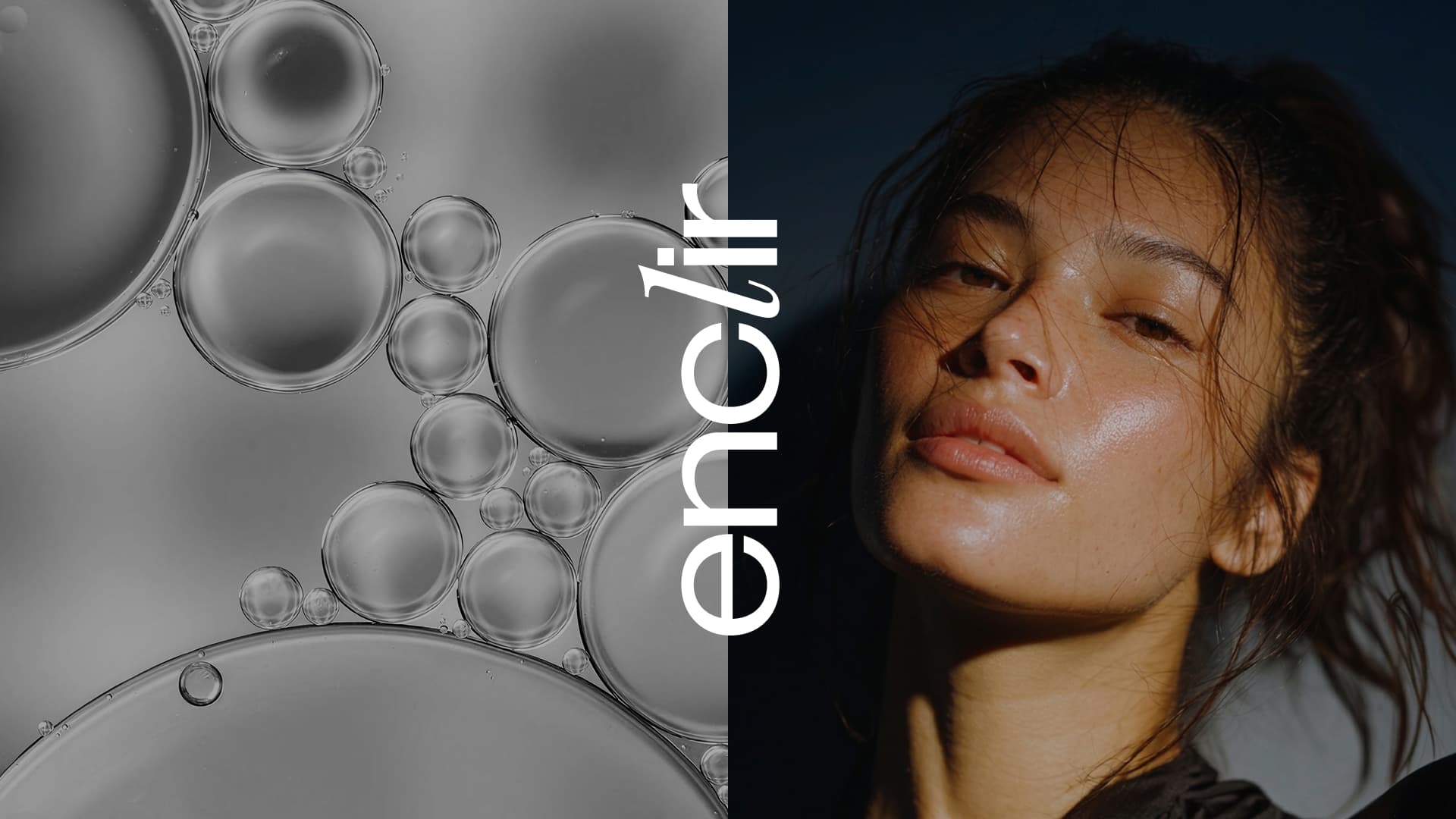
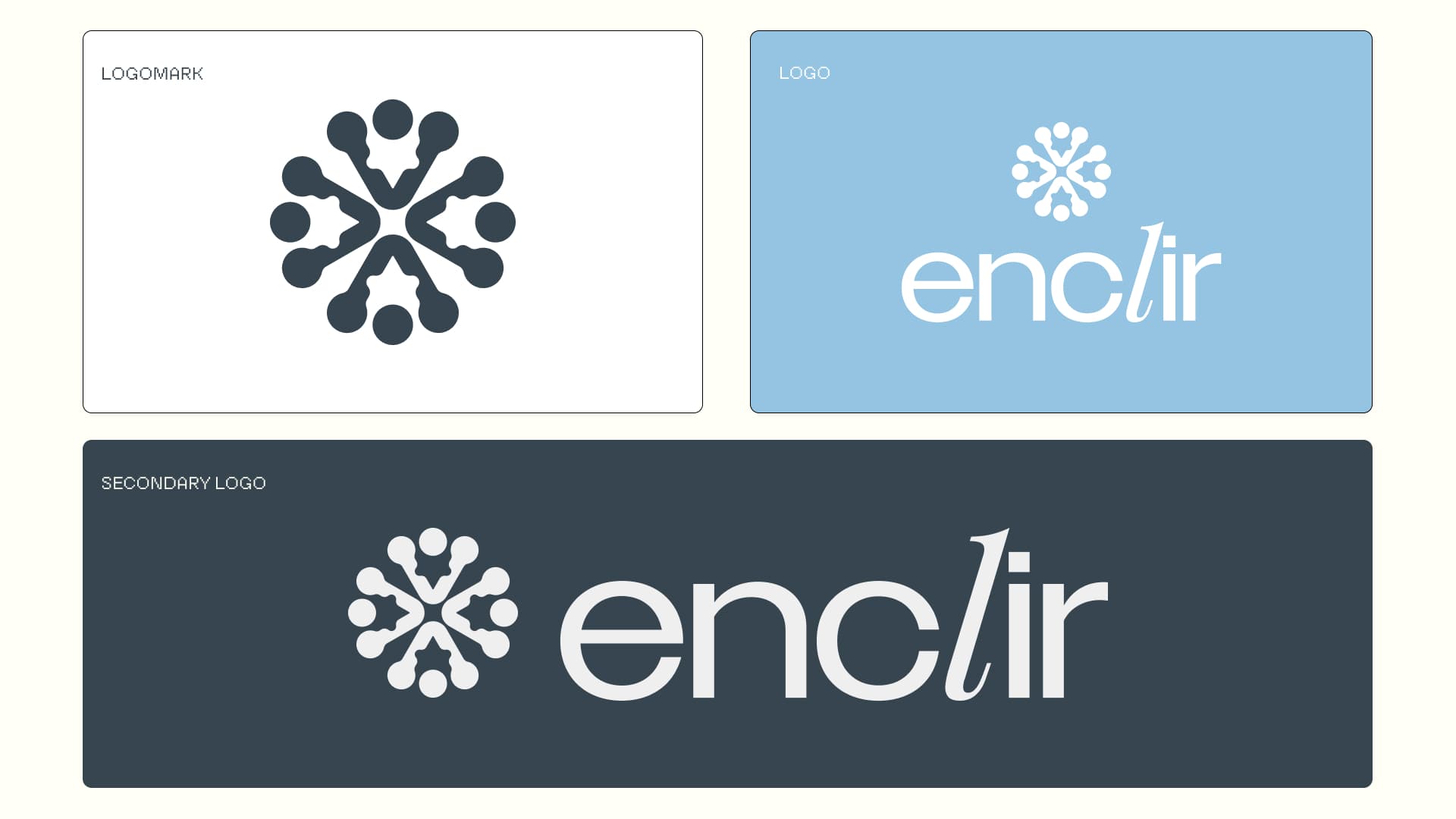
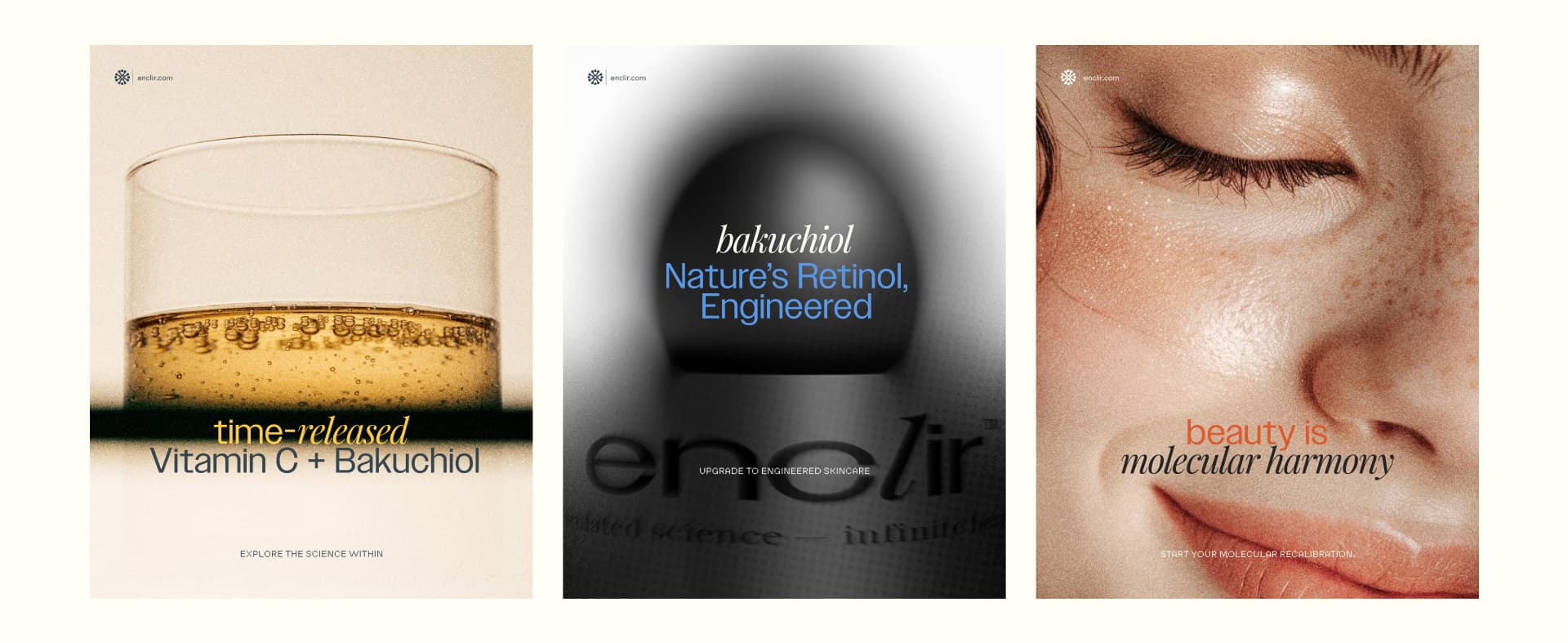
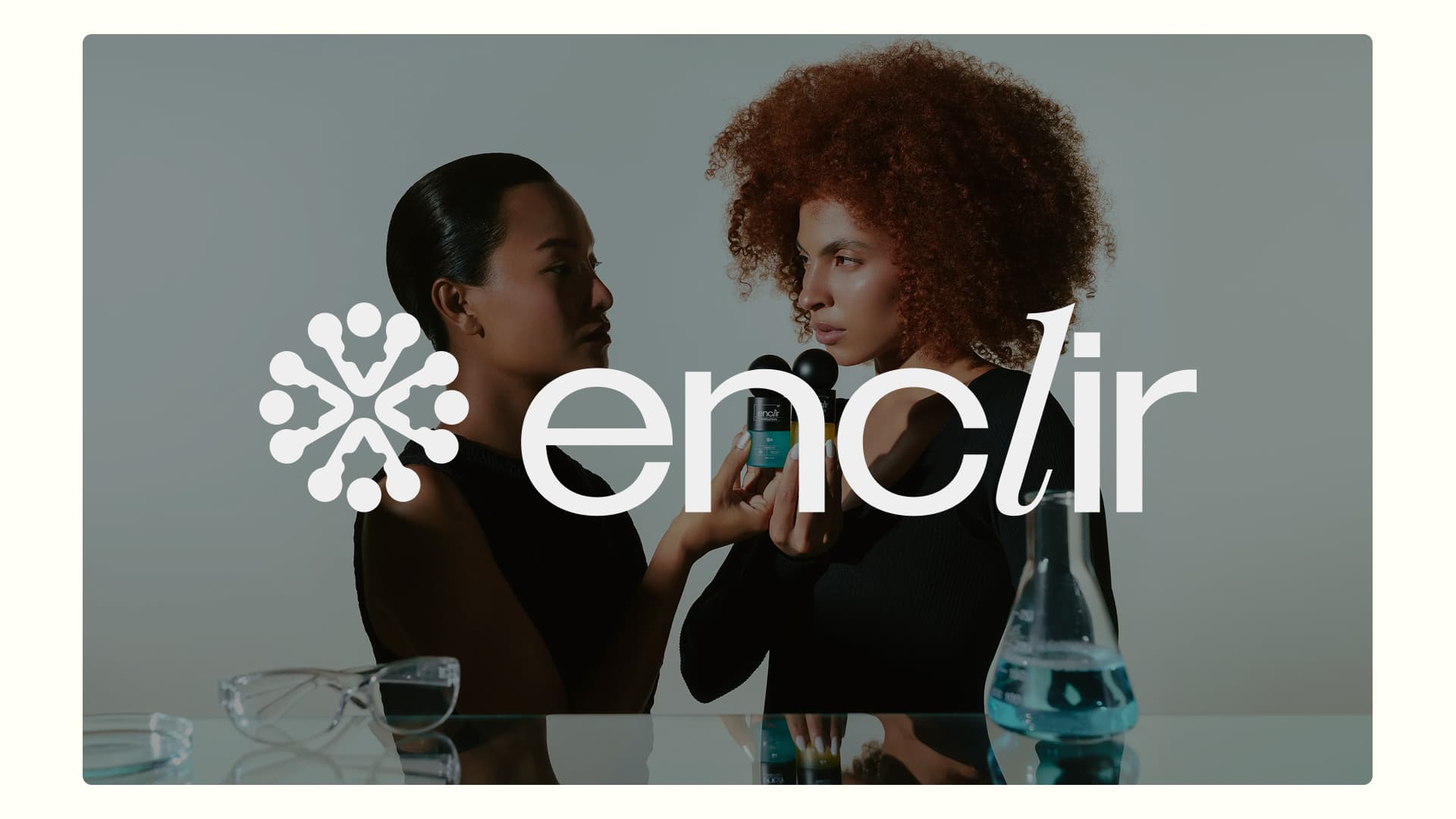
The first half of my job was brand design — defining what Enclir would look like, feel like, and sound like. Every decision answered one question: "Does this feel medically credible?" We didn't create a pretty skincare brand. We created a medical-grade one.
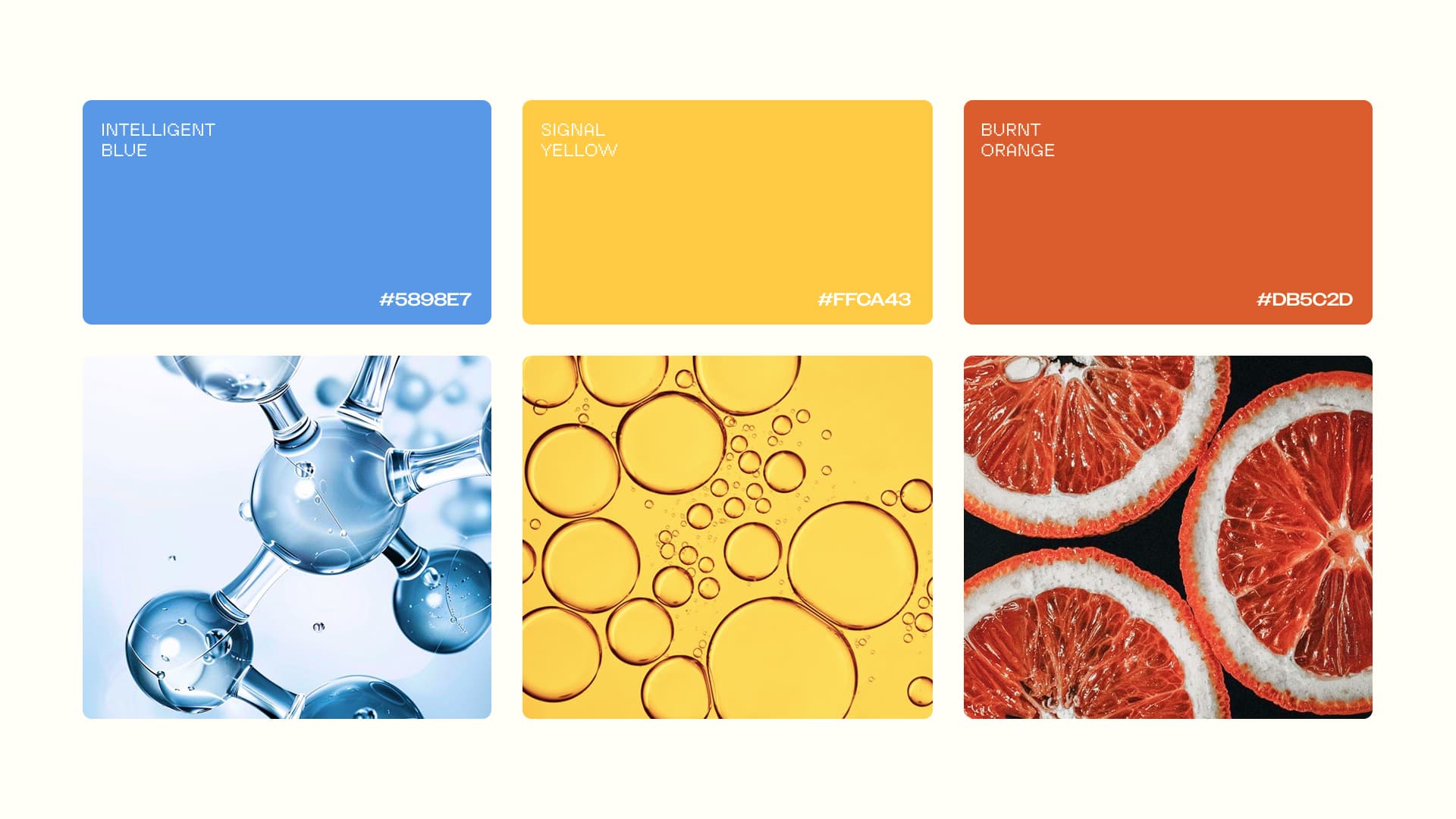
Clean, precise sans-serif that reads "clinical" not "luxury" or "lifestyle."
Minimalist whites and deep grays. Restraint signals premium in clinical markets.
Clinical data, molecular imagery, and published outcomes as hero visual elements.
Direct. Educational. Evidence-driven. No fluff, no false promises, no hype.
ENGINEERING THE
CONVERSION
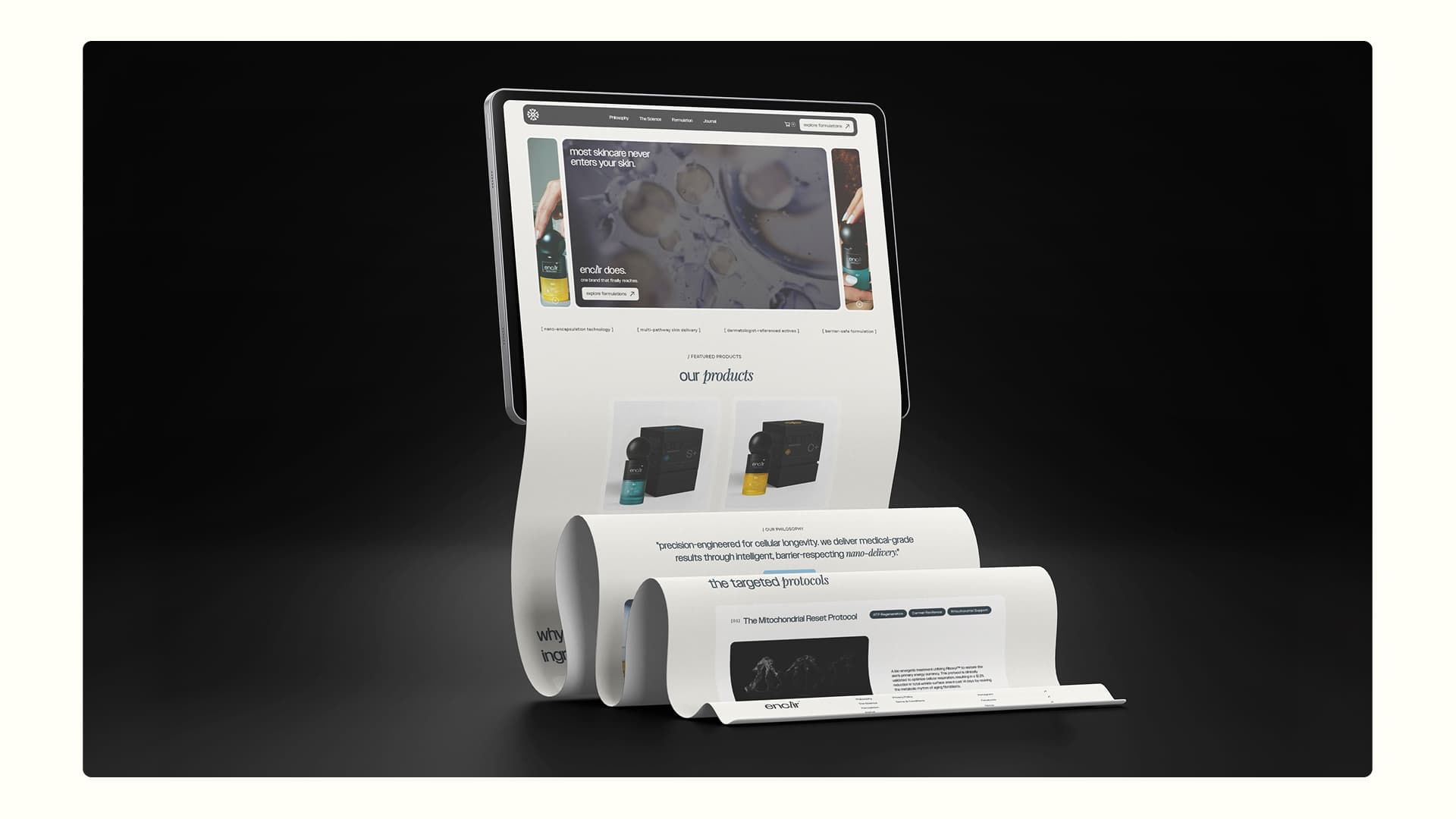
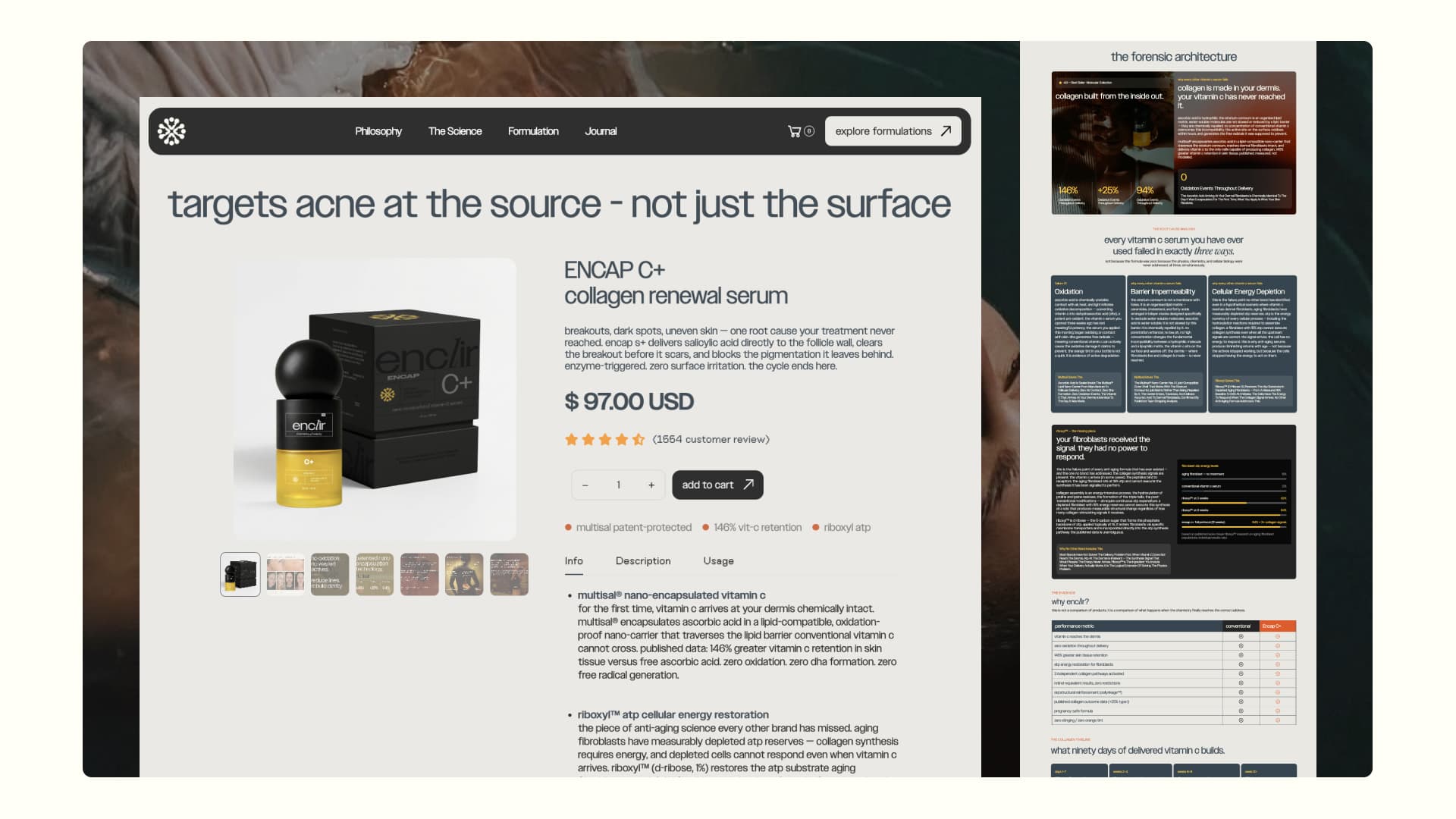
The second half of my job was product design — architecting how the website would actually work. Not what it looks like, but the exact sequence a visitor moves through from knowing nothing about Enclir to trusting it enough to buy. The homepage doesn't open with 'buy now.' It walks the customer through the science, step by step. By the time they reach the product, they already believe.
HOOK
"You've never actually used Vitamin C." An emotional hook rooted in real skin chemistry. Stops the scroll because it challenges something the customer assumed.
THE SCIENCE
146% greater Vitamin C retention. +25% collagen type I at 6 months. Published tissue data, not marketing claims. This is where credibility becomes tangible.
THE SOLUTION
Two hero serums, each introduced by clinical advantage — not price or packaging. The science sells the product.
EDUCATION
"Why delivery matters more than ingredients." A 4-point framework that makes customers invested in the why. Educated customers buy. Confused customers bounce.
PROOF
Clinical before/after progressions, partner logos, and satisfaction metrics. The customer believes the science — now they see that others believe it too.
PROTOCOLS
Three targeted routines positioning the products as a system, not one-off purchases. Increases perceived value and repeat order rate from day one.
When brand and product design work together — when the identity builds trust and the product architecture converts it — the website does the selling. The founder didn't need a sales team. No ads. No discounts. Just a brand that matched the quality of the product, and a website that made people believe it.
MINIMALISM = PREMIUM
In clinical and luxury markets, restraint communicates value. The white space, clean typography, and limited color palette didn't just look clean — they physically communicated that this brand didn't need to shout.
That's not aesthetic preference. That's brand strategy. Every empty space said: 'We're confident enough in the science that we don't need to dress it up.'
EDUCATION IS CONVERSION
Customers who understand your product's why are ten times more likely to buy — and more likely to come back. The long-form educational content didn't hurt conversion. It improved it.
This is product design thinking: the journey a user takes through a page is as important as what the page looks like. Sequence, timing, information architecture — that's the product designer's job. It directly produced the results.
DESIGN ISN'T DECORATION. IT'S STRATEGY.
A dermatologist with great formulations could have launched on Shopify with stock photos and gotten lost in the noise. Brand and product design that matched the quality of what was inside the bottle created a sold-out launch — with zero ad spend.
- Logo & wordmark
- Color palette
- Typography system
- Visual language
- Science positioning
- Custom responsive
- Conversion-optimised funnel architecture
- CMS integration
- Shop + email capture
- Core brand story
- Product positioning
- Educational content strategy that makes customers feel smart